
Radon in Colorado Springs: What It Is, Why It’s Common, and What Homebuyers Should Do
If you’re buying a home in Colorado Springs (or you already own one), radon is one of those topics that comes up fast and for good reason. Radon is common in our area, it’s invisible, and the only way to know your home’s level is to test.
This guide breaks down what radon is, why Colorado Springs has higher radon potential, how radon testing works during a real estate transaction, and what radon mitigation looks like.
Quick Answer: Is Radon Common in Colorado Springs?
Yes. Radon is very common in Colorado Springs and the surrounding suburbs. Many homes test above the EPA action level, and testing is a normal part of buying a home here, right up there with checking the roof and the furnace.
What Is Radon?
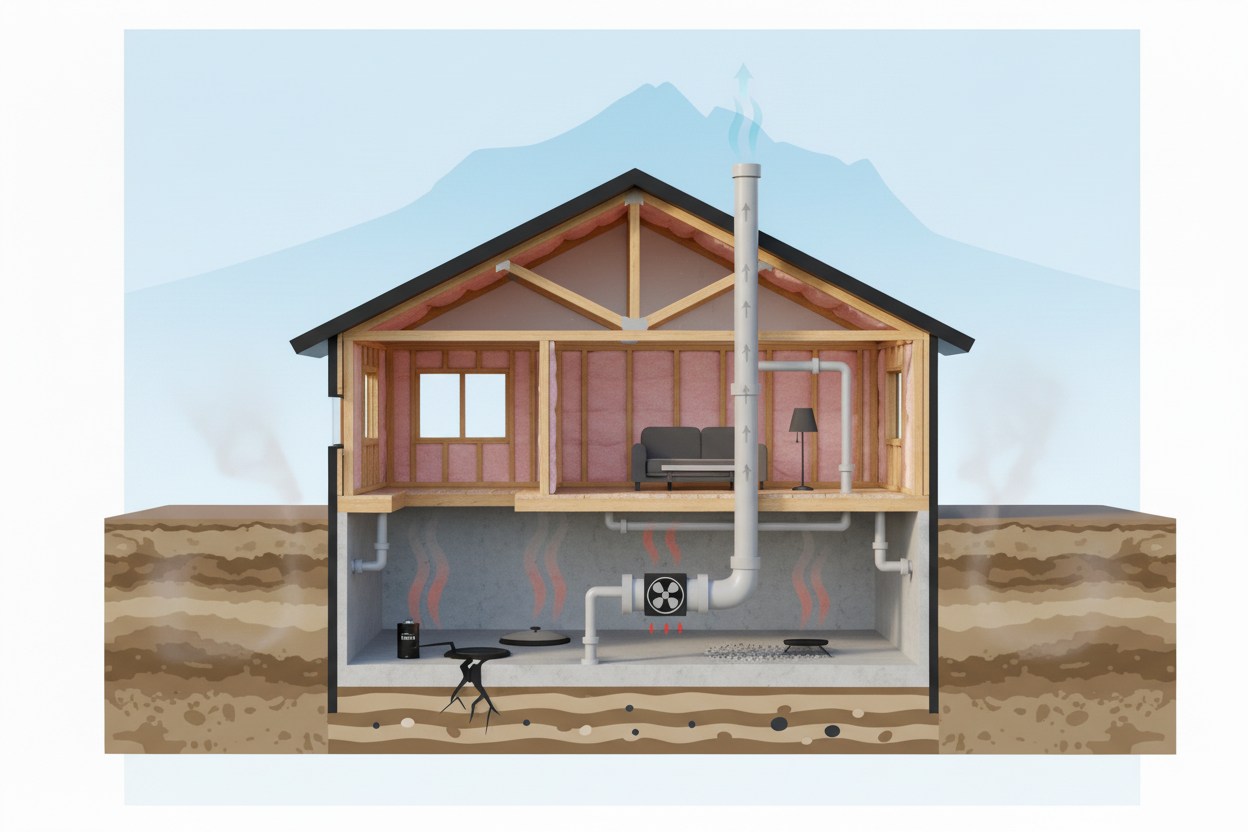
Radon is a naturally occurring radioactive gas that forms when uranium in soil and rock breaks down. It moves up through the ground and can enter homes through:
- Cracks in concrete slabs and foundation walls
- Sump pumps and crawlspaces
- Gaps around pipes and utility lines
- Floor drains and unfinished basements
Radon has no smell, no color, and no taste. A home can look perfect and still have elevated radon levels.
Why Is Radon a Bigger Deal in Colorado Springs?
Colorado Springs sits in a region with geology that can produce and release more radon than many other parts of the country. Add in common local building styles like basements, garden-level homes, and tight energy-efficient construction, and radon can get trapped inside.
Bottom line: it’s not about the house being “old” or “bad.” New builds and remodeled homes can test high too.
What Radon Level Is “Too High”?
Radon is measured in pCi/L (picocuries per liter).
The EPA recommends taking action if a home tests at or above:
4.0 pCi/L4.0\ \text{pCi/L}
Some buyers choose to mitigate at lower levels (like 2.0–3.9 pCi/L) for extra peace of mind, but 4.0 pCi/L is the big benchmark most people use in real estate.
How Radon Testing Works (Especially During a Home Purchase)
In a Colorado Springs home inspection timeline, radon is usually handled as an optional add-on test (but it’s one I strongly recommend here).
What to expect:
- A radon monitor is placed in the lowest livable level of the home (often the basement)
- The test typically runs around 48 hours
- The home needs “closed-house conditions” during the test (windows closed, normal entry/exit)
Once the test is complete, you’ll get a report showing the average level.
What Happens If Radon Is High?
If the test result is at or above 4.0 pCi/L, you generally have a few options:
- Ask the seller to install a radon mitigation system
- Negotiate a credit so you can install it after closing
- In some cases, ask for additional testing (depending on timing and contract terms)
In Colorado Springs, it’s extremely common for deals to move forward with mitigation. This is usually not a “walk away” situation. Iit’s more like: Good to know, let’s fix it.
What Is Radon Mitigation?
Most homes in Colorado Springs that need mitigation get a system called Active Soil Depressurization (ASD).
In plain terms, it’s:
- A PVC pipe (often routed from the basement/crawlspace area)
- A quiet fan that pulls radon from beneath the home
- Venting that releases the gas safely above the roofline
A properly installed system can reduce radon significantly, and many systems include a simple gauge so you can tell it’s working.
Does a Radon Mitigation System Hurt Resale Value?
In Colorado Springs, having a mitigation system is usually viewed as a positive. Buyers here are used to radon being part of the conversation, and a system shows:
- The home was tested
- The issue was addressed
- There’s documentation you can share
It’s often easier to sell a home that’s already mitigated than a home that has never been tested.
Radon Myths I Hear All the Time (Colorado Springs Edition)
Myth #1: “Only old homes have radon.”
Not true. New homes can test high too.
Myth #2: “If my neighbor is fine, I’m fine.”
Radon can vary house to house—even on the same street.
Myth #3: “If I don’t have a basement, I don’t have radon.”
Slab homes and crawlspaces can still test high.
Myth #4: “A radon system is loud or ugly.”
Most are quiet and pretty low-profile.
Should You Test for Radon If You’re Not Buying or Selling?
Yes, especially if:
- You spend a lot of time in a basement or lower level
- You recently finished a basement
- You’ve never tested before
- You’ve done renovations that changed airflow (new windows, new HVAC, sealing, etc.)
Radon testing is one of those “small effort, big info” things.
FAQs: Radon in Colorado Springs
Is radon testing required in Colorado?
Typically, radon testing is not automatically required for every transaction, but it’s commonly recommended in Colorado Springs because levels can be high.
How long does a radon test take?
Most real estate tests are about 48 hours.
Can radon levels change over time?
Yes. Weather, seasons, HVAC use, and home renovations can impact levels. That’s why results are a snapshot and why long-term tests can be useful too.
Final Take: If You’re Buying in Colorado Springs, Radon Testing Is Worth It
Radon is common here, and testing is the only way to know what you’re working with. The good news is that mitigation is straightforward and widely available in our area.
If you’re curious to learn more and want help deciding whether to add radon testing (and how to negotiate it if it comes back high), I’m happy to walk you through it.
Want a quick “inspection game plan” for your Colorado Springs purchase? Shoot me a message and I’ll send you my checklist (including radon, sewer scope, and the stuff our area is known for).

Check out this article next