Data Centers and a Garden of the Gods Concept
News Iris Burton June 13, 2026
News Iris Burton June 13, 2026
Let’s get the obvious part out of the way: Garden of the Gods is iconic. It’s the Colorado Springs postcard...massive red rock formations, wide open skies, and that “wow” feeling you get even if you’ve seen it a hundred times.
So when you hear the phrase “data center near Garden of the Gods,” your brain probably goes: Wait… like servers… next to the rocks?
Totally fair.
But here’s the thing: Colorado Springs is growing fast, and behind the scenes, so is the demand for the tech that powers everyday life. Whether you’re streaming a movie, jumping on a Zoom call, storing family photos, or using AI tools, that data has to live somewhere. And increasingly, companies want it closer to where people actually live and work.
So let’s talk about what a modern data center really is, why a location like Colorado Springs makes sense, and what it could mean for our community, especially if it’s designed with the landscape in mind.
A data center is basically a high-security building full of computers that store and move information.
Think of it like a warehouse for the internet, but instead of boxes, it holds:
servers (the “brains”)
networking equipment (the “highways”)
backup power and cooling (to keep everything stable and safe)
And unlike the old-school image of a loud, industrial building, many modern data centers are designed to be:
quiet
low-profile
clean and modern-looking
heavily landscaped
and, honestly, pretty boring from the outside (which is often the goal)
Colorado Springs checks a lot of boxes:
Growing population → more digital demand
Strong military + cybersecurity presence → secure infrastructure matters
Access to regional fiber routes → better connectivity
Climate advantages (sometimes) → cooler temps can help efficiency
Space to build compared to dense metro areas
And as more businesses move here, the “hidden infrastructure” has to keep up, kind of like roads, water, and power.
If something like this were ever proposed near an area that meaningful, the only acceptable approach would be respect-first design.
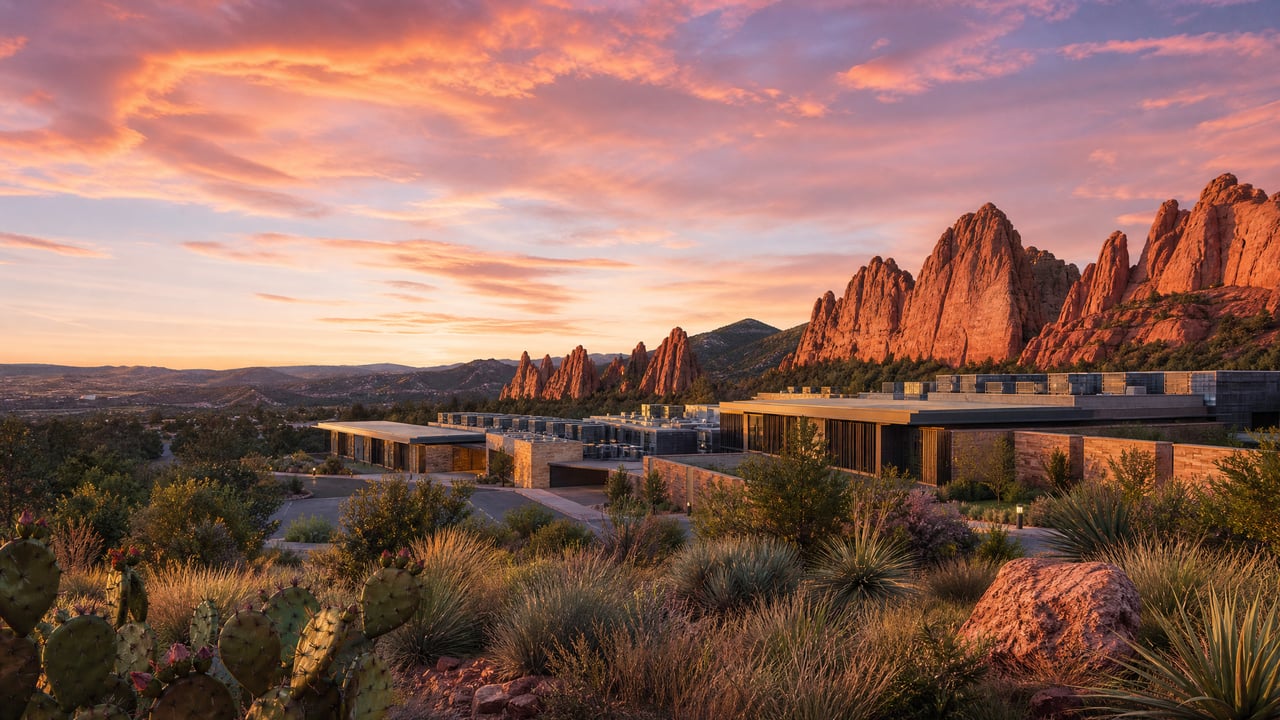
In the concept image, the idea is not “drop a giant sci-fi cube in the middle of nature.” The idea is:
low, horizontal buildings that don’t compete with the skyline
materials that blend rather than shine
landscaping that looks native, not imported
lighting that stays dark-sky friendly
and an overall footprint that feels intentional and restrained
To be clear: this is more of a “what if” concept. But it’s a good way to start a conversation about how we build the future without trashing what makes Colorado Springs special.
Whenever a major infrastructure project comes up, the community questions are real—and they should be.
Here are the main pros and concerns people usually bring up:
Potential upsides
Construction jobs during the build
long-term technical and security roles
increased business investment
support for local companies that rely on high-speed connectivity
Common concerns
water use (especially for cooling, depending on the system)
power draw and grid impact
visual impact, noise, and traffic during construction
“Who benefits?” and “Do we get anything besides the building?”
A well-planned project answers those concerns directly—especially around water and energy.
If you’re picturing best-case scenario, it looks like:
energy-efficient cooling systems that minimize water use
on-site or partnered renewable energy strategies
thoughtful setbacks and landscaping
community transparency (not vague promises)
infrastructure improvements that actually help the region
Because if you’re going to build near a place as loved as Garden of the Gods, you don’t get to be sloppy.
The real question is:
Can we build what we need, in a way that respects the place we live?
Colorado Springs is at that crossroads more and more lately: growth, change, new industry, new residents. Concepts like this push the conversation forward, how we protect what’s iconic while still anticipating what’s next.
If nothing else, it’s a reminder that the future is already here… it’s just usually hidden behind a plain building off a side road.
Stay up to date on the latest real estate trends.
Things to Do
Events, pumpkin patches, fall menus, cozy coffee, and a bucket list for every weekend from September to November
Neighborhoods
A District Built Around the Air Force Academy's Own North Gate
Neighborhoods
Homes, Schools, and Everyday Life in One of Colorado Springs' Most Active Communities
Neighborhoods
A Look at Life in One of Colorado Springs' Beautiful Master Planned Communities
Things To Do
A local's guide to the coffee shops, museums, and neighborhoods that make this a city, not just a view
Things To Do
10 real hikes for golden aspens, plus a few bonus ways to see it without the climb
Things To Do
From quick stops to full day adventures, everything you need to plan your visit

Restaurant & Food
The best spots for a slow morning in the 719

Things To Do
What the start of the school year actually feels like in Colorado Springs
A dedicated real estate professional committed to making every step of your property journey seamless and rewarding. With strong market insight, personalized strategies, and a client-focused approach, each transaction is handled with care, precision, and integrity. Whether buying, selling, or investing, you can expect clear guidance, thoughtful advice, and results that align with your goals.
Iris Burton | Living The Springs
102 S Tejon St #1100 Colorado Springs, CO 80903